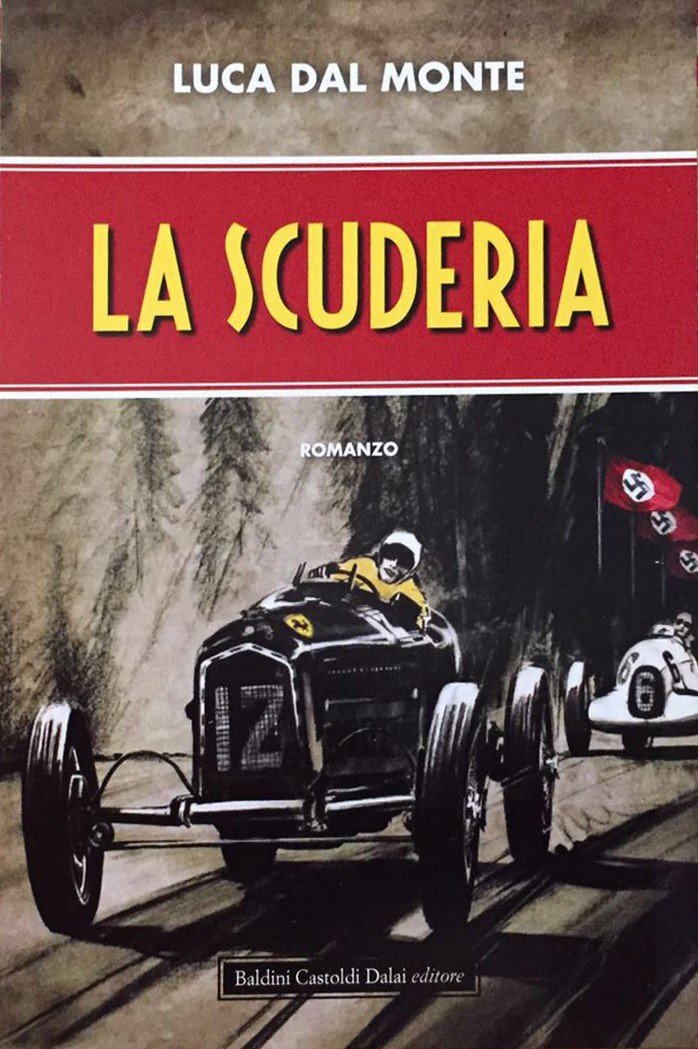
La Scuderia was my first novel. I began writing it long before publication, but every time I thought I was approaching the finish line, my publisher would ask me to set it aside in favour of another non-fiction project. Those books became bestsellers, but La Scuderia remained patiently in a drawer until Michael Schumacher’s remarkable run of World Championships came to an end, allowing me to return to the story I had always wanted to tell.
Rather than recreating the 1936 Grand Prix season, La Scuderia explores one of the most fascinating moments in motor racing history through fiction. Set between the winter and the late summer of 1936, it follows fictional protagonists whose lives become intertwined with those of real-life legends such as Enzo Ferrari, Tazio Nuvolari, Achille Varzi and Rudolf Caracciola, against the backdrop of fierce rivalries involving Mercedes, Auto Union, Alfa Romeo, Maserati and Bugatti.
What fascinated me most was not simply the racing itself, but the world that surrounded it. By the mid-1930s, Grand Prix racing had become far more than a sporting contest. Across Europe, governments had begun to recognise its enormous propaganda value, transforming victories on the circuit into demonstrations of political prestige and national power. It is within this increasingly tense climate, as Europe edged towards war, that the novel’s espionage story unfolds, alongside a love story that gradually becomes inseparable from the wider narrative.
La Scuderia was published on 1 December 2009. It was previewed at the Palazzo Comunale in my hometown of Cremona before its official launch in Modena the following day. A few days later, a two-minute feature on Rai’s flagship news programme, TG1, unexpectedly transformed the book’s fortunes. The first print run sold out within a week, prompting a second edition that proudly carried the strapline: 10,000 copies in a week.